Prove what your AI never saw. Not just what it did.
Blade Labs gives Data Protection Officers cryptographic, third-party-verifiable evidence that personal data was redacted before it ever reached an AI model. Designed to produce regulator-verifiable proof aligned to GDPR, EU AI Act, QCB, CBUAE, and PRA SS1/23 obligations. Bring-your-own-AI. No vendor lock-in.
AI vendors promise privacy. Regulators want proof.
GDPR Article 5 requires data minimisation. EU AI Act requires logging of high-risk AI processing. QCB and CBUAE AI guidance require evidence of data governance. Mainstream AI vendors give you a privacy policy, not cryptographic evidence.
0
mainstream AI vendors produce cryptographic redaction proof
No proof of what AI actually saw
When staff send a prompt to ChatGPT or Copilot, you have a vendor assurance that data is not used for training. You do not have cryptographic evidence of which fields reached the model, which were masked, and under what policy. Audit logs are vendor-asserted.
64%
of EU enterprises flag AI as a privacy compliance gap
DPIAs are documentation, not enforcement
You can write a Data Protection Impact Assessment that says "PII is redacted before AI processing." Evidencing it is another matter. Most enforcement happens in code your DPO cannot inspect. The gap between policy and runtime is your exposure.
5+
data residency regimes to satisfy simultaneously
Cross-border data residency is fragile
GDPR adequacy decisions, Schrems II, and Gulf data localisation rules (Qatar, UAE, Saudi) demand evidence that personal data does not leave authorised jurisdictions. Mainstream AI inference is often offshore. Proving compliance is harder than achieving it.
The DPO-grade evidence stack
Cryptographic non-disclosure proof, regulator-grade evidence packs, and selective disclosure for sharing only what each stakeholder needs.
ZeroH Disclosure
AlphaCryptographic non-disclosure proof for every AI prompt
ZeroH Disclosure intercepts every prompt before it reaches an AI, applies your data-disclosure policy at field level, and is designed to produce tamper-evident evidence of what was redacted, when, under which rule, and what the AI never saw. Designed for DPOs who need to evidence non-disclosure. Not just claim it.
- ✓Field-level PII classification and redaction before any prompt reaches an AI
- ✓Designed to produce tamper-evident evidence of what was masked, when, and under which rule
- ✓Selective disclosure with cryptographic proof (designed to produce). Share evidence without exposing data
- ✓On-premise data residency with tamper-evident anchoring
- ✓DPIA-ready audit trail aligned to GDPR Article 35
- ✓Bring-your-own-AI. Works with Copilot, Claude, ChatGPT, internal agents
Trust Center
LiveShare privacy proof without exposing data
A public-facing portal where regulators, auditors, and data subjects can verify your data protection posture cryptographically. Selective disclosure with cryptographic proof means each stakeholder sees exactly what they need. No over-exposure, no leaked credentials.
- ✓Cryptographic credential verification without raw data exposure
- ✓Selective disclosure for role-based access
- ✓Self-service verification for DPAs, auditors, and counterparties
- ✓Tamper-evident anchoring for provenance
ZeroH
LiveAgentic AI security platform with full provenance
For organisations that run AI agents in regulated workflows, ZeroH delivers full agent action auditability, human delegation provenance, and knowledge controls. Every agent decision is signed and anchored. Regulator-grade evidence on demand.
- ✓Agent workflow orchestration with full action auditability
- ✓Human delegation provenance. Signed evidence of who authorised what
- ✓Knowledge source controls per policy
- ✓Tamper-evident immutable audit trails
From DPIA documentation to runtime cryptographic evidence
Blade Labs closes the gap between what your DPIA says and what your AI actually does. With proof that holds up to a regulator audit.
Cryptographic evidence of what your AI never saw
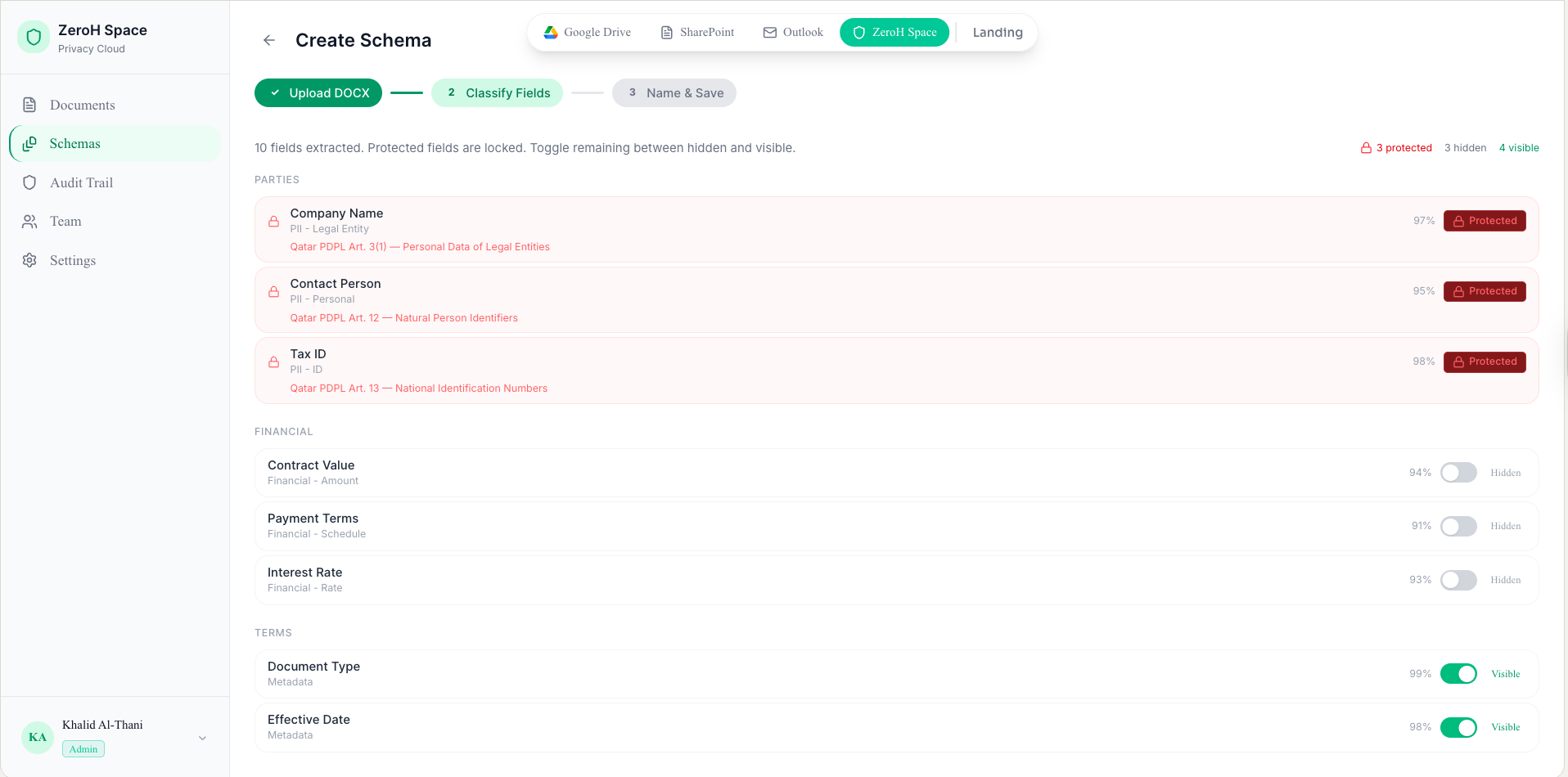
Most audit logs prove what happened. ZeroH Disclosure is designed to evidence what did not happen. That a specific PII field was redacted before the prompt reached the model, under a specific policy, at a specific time. Selective disclosure with cryptographic proof lets you evidence the negative without exposing the underlying data.
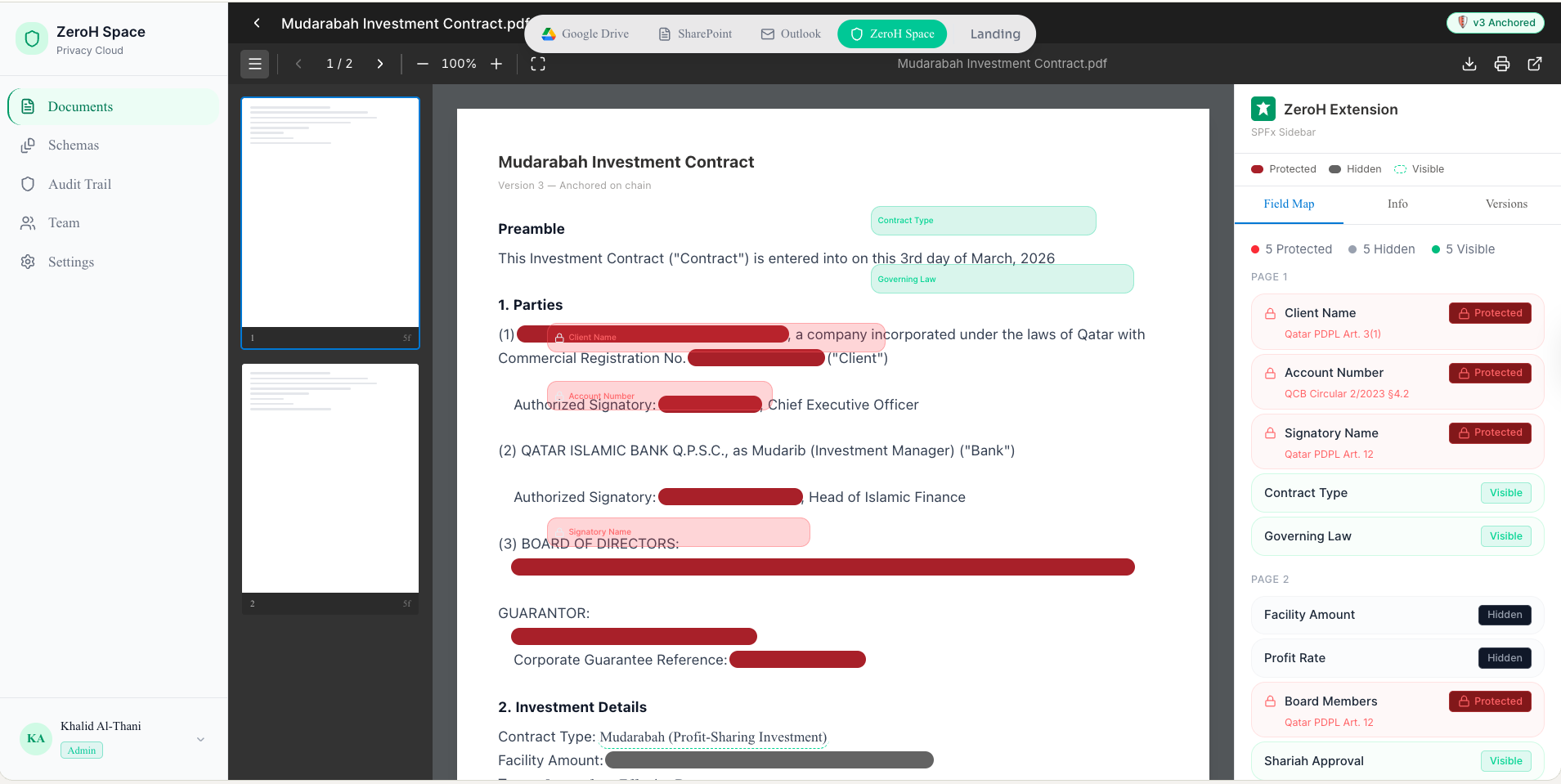
On-soil anchoring for Gulf and EU data residency rules
Originals stay on infrastructure under your control. Cryptographic anchors are written to tamper-evident storage with on-soil residency where available. Evidence your data did not leave authorised jurisdictions, in a form your DPA can verify independently.
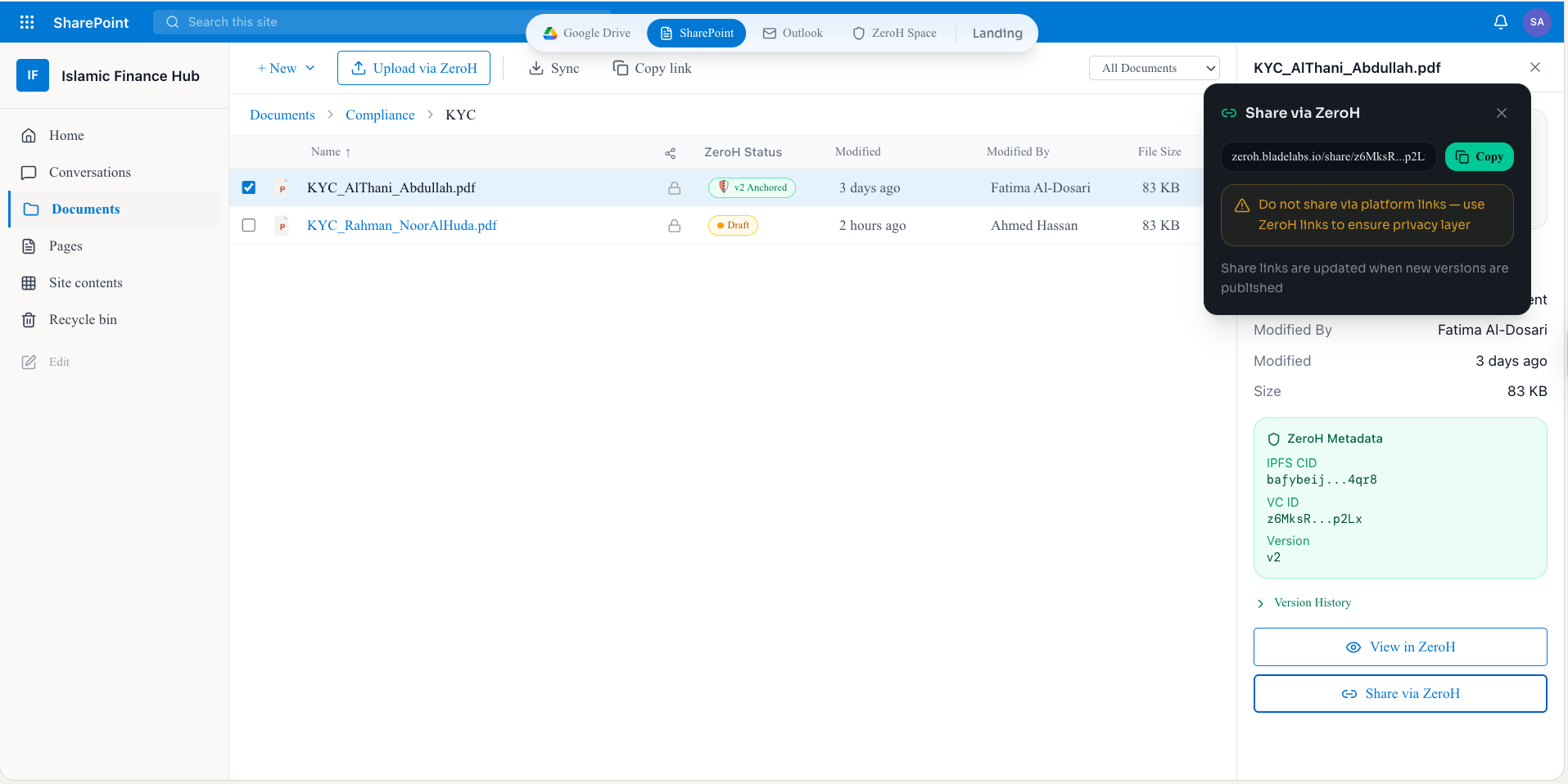
Your DPIA becomes runtime policy, not just documentation
Disclosure policies in ZeroH are machine-executable. The policy your DPIA describes is the same policy that runs in front of every AI prompt. When the auditor asks "show me the policy enforcement", you show them the signed runtime. Not a Word document.
Frequently Asked Questions
Evidence your DPA will accept.
Schedule a demo to see how Blade Labs delivers cryptographic evidence of AI non-disclosure aligned to GDPR, EU AI Act, and Gulf data protection regimes.